Montreal Expos
The Montreal Expos brought Quebec and Canada into the world of Major League Baseball. From 1969 to 2004, the team experienced promising seasons, heartbreaking disappointments, and an interrupted dream that still inspires regret. Although they never won the World Series, they became a lasting symbol of Montreal’s sporting identity.
Major League Baseball Comes to Canada
In 1969, the Expos became the first Major League Baseball team based outside the United States. Their name paid tribute to Expo 67, the world’s fair that had confirmed Montreal’s international stature two years earlier.
The arrival of the team was a bold undertaking in a city dominated by hockey. Montreal nevertheless had a genuine baseball tradition, particularly through the Royals, the former minor-league club for which Jackie Robinson played in 1946.
The Expos played their first seasons at Jarry Park, a modest stadium whose intimate atmosphere brought players and spectators close together. Rusty Staub, nicknamed “Le Grand Orange,” quickly became the team’s first major star and one of the fans’ favourites.
A Distinctly Montreal Identity
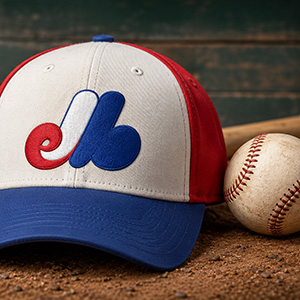
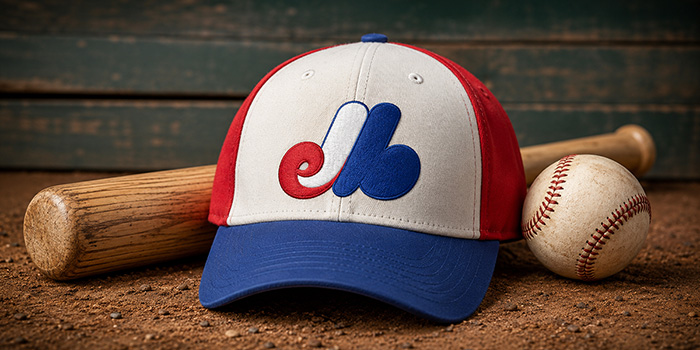
The tricolour logo, caps, and blue, white, and red uniforms gave the Expos an immediately recognizable image. French also held a visible place in radio broadcasts, newspapers, and the cheers of the fans.
For many Quebecers, following the team was a way to discover the vocabulary and rules of a sport that was less deeply rooted than hockey. Youppi!, the mascot introduced in 1979, also became a popular symbol through his exuberant appearance and comic antics.
From Jarry Park to Olympic Stadium
In 1977, the team left Jarry Park and moved into Olympic Stadium, which had been built for the 1976 Montreal Games. The enormous building offered far more seating, but its size could make the atmosphere feel cold when the stands were not full.
The stadium nevertheless hosted the greatest seasons in the organization’s history. The large crowds during successful years proved that Montreal could passionately support a competitive baseball team.
Problems with the building and the lack of a stadium designed specifically for baseball eventually placed a strain on the relationship between the club and its fans.
A Remarkable Source of Talent
The Expos distinguished themselves through their ability to identify and develop excellent players. Gary Carter, an energetic catcher and natural leader, became one of the faces of the organization. Andre Dawson combined power, speed, and defensive excellence, while Tim Raines became one of the greatest base stealers of his era.
Steve Rogers, Tim Wallach, and Ellis Valentine also contributed to the team’s best lineups of the 1970s and 1980s. Later, the organization developed players such as Larry Walker, Marquis Grissom, Moises Alou, Pedro Martínez, and Vladimir Guerrero.
This ability to develop talent was one of the Expos’ greatest strengths, but it also revealed an economic weakness. The team often struggled to retain its stars once they became eligible for more expensive contracts.
The Great Hope of 1981
The 1981 season gave the Expos their only playoff appearance. Gary Carter, Andre Dawson, and Tim Raines formed the core of a fast and talented team.
Montreal won its division by defeating the Philadelphia Phillies, then faced the Los Angeles Dodgers for the National League championship.
In the deciding game at Olympic Stadium, Rick Monday hit a ninth-inning home run that gave the Dodgers the lead. The defeat on October 19, quickly nicknamed “Blue Monday,” remains one of the most painful moments in Montreal sports history.
The Interrupted Dream of 1994
In 1994, the Expos probably had the best team in their history. Moises Alou, Larry Walker, Marquis Grissom, Pedro Martínez, and several others formed a spectacular group managed by Felipe Alou.
When the season was halted by a players’ strike in August, Montreal had a record of 74 wins and 40 losses, the best in Major League Baseball. The remainder of the schedule and the playoffs were eventually cancelled.
No one can say with certainty that the Expos would have won the World Series. They did, however, have a genuine opportunity to reach it. The cancellation turned that exceptional season into an eternal “what if?”
The consequences were severe. Unable to afford all of its players, the team dismantled a large part of its roster before the following season. The confidence of many fans was deeply shaken.
The Slow Decline and Departure
Beginning in the mid-1990s, financial difficulties, instability surrounding ownership, and the absence of a new stadium weakened the organization. Attendance declined, and the team lost some of its visibility.
Major League Baseball took control of the club in 2002. During the 2003 and 2004 seasons, several home games were played in San Juan, Puerto Rico, further reducing the team’s presence in Montreal.
The Expos played their final game at Olympic Stadium on September 29, 2004. After the season, the franchise moved to Washington and became the Nationals in 2005. Thirty-six seasons of Major League Baseball in Montreal had come to an end.
A Team That Remains in Collective Memory
The Expos never won the World Series, but their legacy extends far beyond their results. They introduced Major League Baseball to several generations and gave Montreal a sporting identity distinct from the one associated with the Canadiens.
The logo, the uniforms, Youppi!, “Blue Monday,” and the 1994 season remain powerful points of reference. Fans remember afternoons at Jarry Park, evenings at Olympic Stadium, and summers shaped by radio broadcasts of the games.
That memory is filled with pride, but also with nostalgia. The Expos represent a team that disappeared before it could accomplish everything its greatest moments seemed to promise.
Quiz questions preview
-
Who was the first manager of the Montreal Expos in Major League Baseball in 1969?
Felipe Alou | Jim Fanning | Dick Williams | Gene Mauch -
How many win has Gene Mauch won as manager of the Montreal Expos?
399 | 499 | 699 | 599 -
How many wins did the Montreal Expos win in their first season in 1969?
62 | 82 | 72 | 52 -
Which Montreal Expos player scored 97 stolen goals in the 1980 season?
Ron LeFlore | Tim Raines | Maury Wills | Rodney Scott -
In which Major League Baseball did the Montreal Expos play?
American League | National League | International League | Continental League