
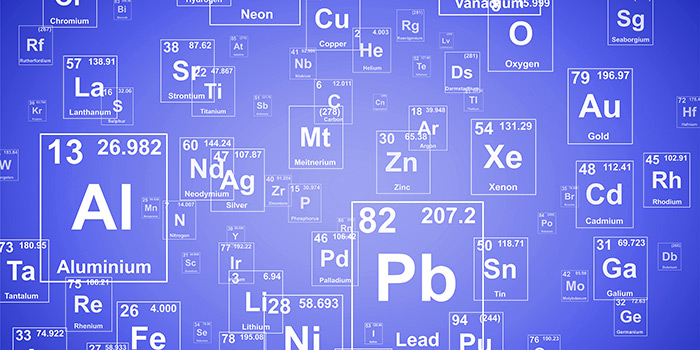
The Periodic Table
The periodic table is a true map of matter. It brings together the chemical elements that make up stars, planets, living organisms, and everyday objects. Its organization makes it possible to compare their properties, predict their reactions, and understand the deep connections between substances that may otherwise seem very different.
The Origins of the Periodic Table
By the 19th century, chemists already knew of several dozen elements, but they had no satisfactory system for classifying them. Some researchers had noticed similarities among certain groups of elements, particularly lithium, sodium, and potassium, but their proposed classifications remained incomplete.
In 1869, Russian chemist Dmitri Mendeleev presented a classification based mainly on atomic mass and chemical properties. He placed elements with similar behaviours in the same columns.
His most remarkable idea was to leave empty spaces in his table. Mendeleev believed that some elements had yet to be discovered, and he even predicted their main properties. The later discovery of gallium, scandium, and germanium confirmed several of his predictions and strengthened the credibility of his system.
The modern periodic table, however, is based on atomic number rather than atomic mass. This change resulted in part from the work of British physicist Henry Moseley, who demonstrated in the early 20th century that elements should be classified according to the number of protons in their nuclei.
Atomic Number and the Identity of Elements
Each element has a unique atomic number. It corresponds to the number of protons contained in the nuclei of its atoms.
Hydrogen has one proton and therefore has atomic number 1. Helium, which has two protons, has atomic number 2. Uranium, with its 92 protons, occupies position 92.
The number of protons determines the identity of an element. An atom containing six protons is always a carbon atom. If its nucleus gained or lost a proton, it would become a different element.
In an electrically neutral atom, the number of electrons is equal to the number of protons. An atom can, however, gain or lose electrons and become a charged ion without changing into another element.
How to Read a Periodic Table Square
The square assigned to an element usually provides several essential pieces of information:
-
The atomic number indicates the number of protons.
-
The chemical symbol is a universal abbreviation of the element’s name.
-
The name identifies the element in the language being used.
-
The atomic mass represents an average that takes the element’s different natural isotopes into account.
Some symbols come directly from the English name of the element, such as H for hydrogen, O for oxygen, and C for carbon. Others come from Latin or from an older name. The symbol for iron, Fe, comes from the Latin word ferrum, while the symbol for gold, Au, comes from aurum.
The first letter of a chemical symbol is always capitalized. When a second letter is present, it is always lowercase. Co therefore represents cobalt, while CO represents a molecule composed of carbon and oxygen.
Periods and Groups
The horizontal rows of the periodic table are called periods. They correspond to the gradual filling of electron shells around the nucleus.
The table contains seven periods. The first includes only hydrogen and helium, while the following periods become progressively longer as the number of electrons increases.
The vertical columns are called groups or families. The modern periodic table contains 18 groups. Elements in the same group often have a similar number of electrons in their outermost shell, which explains their comparable chemical properties.
Outer electrons, known as valence electrons, play a decisive role in chemical reactions. They influence the way atoms form bonds, gain electrons, or lose them.
The Main Chemical Families
Alkali Metals
The alkali metals occupy Group 1, with the exception of hydrogen. This family includes lithium, sodium, and potassium.
These metals are soft, light, and highly reactive. They tend to lose one electron and form a positive ion. Their reaction with water can be violent and may produce hydrogen as well as an alkaline solution.
Because of their reactivity, they are generally not found in a pure state in nature.
Alkaline Earth Metals
Group 2 includes beryllium, magnesium, and calcium. These elements are reactive, but generally less so than the alkali metals.
Calcium plays an important role in bones, teeth, and shells. Magnesium is essential to many biological functions and is part of the chlorophyll found in plants.
Transition Metals
Groups 3 to 12 contain the transition metals. They include iron, copper, nickel, silver, gold, and platinum.
These elements are often good conductors of heat and electricity. Many are solid, strong, and malleable. They can also form coloured compounds and exist in different oxidation states.
Iron is essential to the production of steel. Copper is widely used in electrical wires, while gold and platinum are valued for their resistance to corrosion.
Halogens
The halogens occupy Group 17. This family includes fluorine, chlorine, bromine, iodine, and astatine.
They are highly reactive and tend to gain one electron. They frequently form salts when they react with metals. Sodium chloride, or table salt, is produced by the combination of sodium and chlorine.
Pure halogens can be dangerous, but their compounds are essential in many fields. Fluoride is used in some dental products, chlorine is used to disinfect water, and iodine is necessary for the proper functioning of the thyroid gland.
Noble Gases
The noble gases form Group 18. Helium, neon, argon, krypton, xenon, and radon belong to this family.
Their outer electron shell is generally complete, which makes them only slightly reactive. Under ordinary conditions, they exist as gases.
Helium is used in balloons and in certain technologies requiring extremely low temperatures. Neon is associated with illuminated signs, while argon protects certain materials during welding.
Metals, Non-Metals, and Metalloids
Most elements in the periodic table are metals. They occupy mainly the left side and centre of the table. They are generally shiny, malleable, and good conductors of heat and electricity.
Non-metals are found mainly in the upper-right section. They have highly varied properties. Some, such as oxygen and nitrogen, are gases. Carbon is a solid, while bromine is a liquid under ordinary conditions.
Between the metals and non-metals is a staircase-shaped area containing the metalloids. Boron, silicon, germanium, and arsenic are examples. Their intermediate properties make them particularly useful in the production of semiconductors and electronic components.
Electron Blocks
The periodic table can also be divided into four blocks, named according to the type of orbital occupied by the atom’s final electron.
-
The s-block includes the first two columns as well as helium.
-
The p-block contains the final six columns.
-
The d-block corresponds mainly to the transition metals.
-
The f-block includes the lanthanides and actinides, which are usually placed beneath the main table.
This organization reflects the electronic structure of atoms. It explains why the position of an element can be used to predict its chemical behaviour.
Lanthanides and Actinides
The two rows placed beneath the main table are not separated for chemical reasons, but to prevent the table from becoming excessively wide.
The lanthanides, from lanthanum to lutetium, are sometimes called rare-earth elements. Despite this name, several are relatively abundant in Earth’s crust. They are used in powerful magnets, screens, batteries, lasers, and various electronic technologies.
The actinides, from actinium to lawrencium, are all radioactive. This series includes thorium, uranium, and plutonium. Several elements located after uranium have been produced artificially in laboratories or nuclear reactors.
Periodic Trends
The organization of the periodic table reveals regular variations in the properties of elements.
Atomic radius, which approximately represents the size of an atom, generally increases from the top to the bottom of a group. New electron shells are added as one moves downward.
Within a period, the atomic radius instead tends to decrease from left to right. The number of protons increases, causing the electrons to be attracted more strongly toward the nucleus.
Ionization energy measures the energy required to remove an electron from an atom. It generally increases from left to right and decreases from top to bottom.
Electronegativity represents an atom’s ability to attract electrons involved in a chemical bond. Fluorine is the most electronegative element. Alkali metals, located on the opposite side of the table, attract electrons much less strongly.
Isotopes and Atomic Mass
Atoms of the same element always have the same number of protons, but they may contain different numbers of neutrons. These variations are called isotopes.
Carbon has three well-known isotopes. Carbon-12 and carbon-13 are stable, while carbon-14 is radioactive. The latter is used to date certain organic remains.
The atomic mass shown in the periodic table is therefore not necessarily a whole number. It represents the weighted average of the masses of the natural isotopes, based on their abundance.
Some isotopes are stable, while others decay by releasing particles or energy. This radioactivity can be used in medicine, energy production, industry, and scientific research.
Natural and Synthetic Elements
Many elements occur naturally on Earth, although some are extremely rare. Others have been created artificially by bombarding atomic nuclei with particles or other nuclei.
The heaviest synthetic elements are often highly unstable. They may exist for only fractions of a second before decaying.
The periodic table contains 118 recognized elements, from hydrogen to oganesson. The most recently recognized elements occupy the seventh period and were produced using specialized scientific facilities.
The discovery of a new element must be confirmed through reproducible experiments. Its name and symbol are then approved according to international rules. Names may honour a person, a place, a region, a property, or a mythological figure.
Some Essential Elements
-
Hydrogen is the lightest and most abundant element in the Universe.
-
Helium is produced in large quantities by nuclear reactions inside stars.
-
Carbon forms the basis of organic chemistry and known life.
-
Nitrogen makes up most of Earth’s atmosphere.
-
Oxygen is essential to the respiration of many organisms.
-
Silicon is found in many minerals and plays a major role in electronics.
-
Iron is abundant in Earth’s core and is essential to the transport of oxygen in the blood.
-
Calcium contributes to the strength of bones and teeth.
-
Uranium can be used as fuel in nuclear power plants.
-
Gold strongly resists oxidation and remains an excellent conductor of electricity.
Quiz questions preview
-
What is the atomic number of carbon?
12 | 14 | 8 | 6 -
What is the chemical symbol of lead?
Pb | P | W | Pl -
What element is designated by the chemical symbol He?
Helium | Hassium | Holmium | Hydrogen -
What is atomic number 20?
Titanium | Chromium | Calcium | Sulfur -
What is the chemical symbol of oxygen?
O | Og | Ox | O2