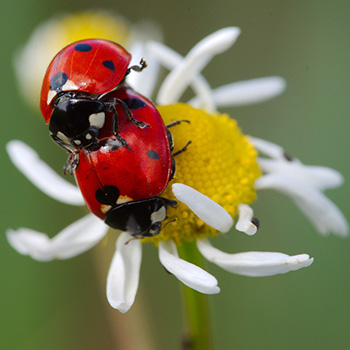

Animal Reproduction
Reproduction allows animal species to survive from one generation to the next. It relies on a wide variety of mechanisms, ranging from the division of a single organism to the union of specialized sex cells. Reproductive strategies vary according to habitat, lifestyle, predation risks, and the young animals’ chances of survival.
Sexual and Asexual Reproduction
Sexual reproduction generally involves two reproductive cells called gametes. The male gamete, usually a sperm cell, fuses with the female gamete, generally an egg cell. This union forms a fertilized egg, or zygote, containing a mixture of genetic material from both parents. Sexual reproduction therefore promotes genetic diversity.
Asexual reproduction requires only one parent and does not involve the fusion of gametes. The offspring are genetically very similar to the original organism. This form of reproduction is often fast and efficient when environmental conditions are stable.
Its main forms include:
-
Fission, during which an organism divides into two individuals.
-
Budding, in which a new individual develops from the parent, as in the hydra.
-
Fragmentation, in which part of the body can regenerate into a complete individual.
-
Parthenogenesis, in which an embryo develops from an unfertilized egg.
In some species, sexual and asexual reproduction may alternate depending on the season or environmental conditions.
Sexes and Reproductive Organization
In many species, individuals are either male or female. Some species, however, are hermaphroditic, meaning that one individual possesses both male and female reproductive organs. This organization is common among certain mollusks and worms.
Hermaphroditism may be simultaneous or sequential. Some clownfish are born male and may later become female, while many wrasses begin life as females before becoming males.
In several turtles and crocodilians, the incubation temperature of the eggs influences the sex of the hatchlings.
Fertilization
External fertilization occurs outside the female’s body, usually in water. The parents release their gametes into the environment. This strategy is common among fish, amphibians, and many aquatic invertebrates. It often involves the production of large numbers of gametes because many of them will never develop into embryos.
Internal fertilization takes place within the female reproductive system. It requires mating or the transfer of sperm. It is common among reptiles, birds, mammals, insects, and certain fish. It protects the gametes from drying out.
Oviparity, Viviparity, and Ovoviviparity
Oviparous animals lay eggs in which the embryo continues to develop. Birds, most reptiles, amphibians, many fish, and a large proportion of invertebrates are oviparous. The egg contains the nutrients required for the young animal’s development.
In viviparous animals, the embryo develops inside the mother’s body and receives some or all of its nutrients directly from her. Viviparity is characteristic of most mammals, but it also occurs in certain reptiles and fish.
In ovoviviparous animals, the eggs remain inside the female’s body until they hatch, but the embryo feeds mainly on the nutrients stored in the egg. The young are therefore born alive. This strategy is found in certain sharks, snakes, and lizards.
Development of the Young
In direct development, the young animal resembles a miniature version of the adult. It then grows without undergoing any major transformation. This is the case among mammals, birds, and most reptiles.
In indirect development, the young animal passes through one or more stages that differ from the adult form. This process is known as metamorphosis.
-
In frogs, the aquatic tadpole transforms into an adult with lungs and legs.
-
In butterflies, the caterpillar becomes a chrysalis and then a winged adult.
-
In certain insects, the nymph already resembles the adult but is smaller and lacks fully developed wings.
-
In many marine animals, the larvae live among plankton before taking on their adult form.
These transformations often allow young and adult animals to use different resources.
Reproductive Behaviours
Animal reproduction often includes behaviours intended to attract, select, or defend a mate. Songs, colours, scents, dances, and fights may signal an individual’s availability or fitness.
Among birds, the male may sing, build a nest, or display its plumage. In some mammals, males fight for access to females. Insects frequently use chemical substances called pheromones. Among fish, courtship may involve changes in colour or the preparation of a spawning site.
Sexual selection favours traits that increase reproductive success, even when those traits come at a cost. The peacock’s long tail attracts females, but it may also hinder movement and make the male more visible to predators.
Parental Care
The care given to eggs and young animals varies greatly. Some species produce thousands of eggs without protecting them. Others have only a few offspring but devote considerable time and energy to their survival.
Parental care may include:
-
Building and defending a nest.
-
Incubating the eggs.
-
Carrying the eggs or young.
-
Feeding, protecting, and teaching the young.
-
Nursing among mammals.
In seahorses, the male carries the embryos in a brood pouch. Among emperor penguins, the male keeps the egg warm on his feet. In crocodilians, the female protects the nest and sometimes helps the hatchlings reach the water.
Strategies Adapted to the Environment
Each species distributes its energy differently between the number of offspring produced and the care given to each one. Animals that produce many young rely on quantity to compensate for high mortality. Those that have few offspring generally invest more heavily in protecting them.
Salmon lay thousands of eggs, only a small proportion of which will reach adulthood. Elephants, by contrast, usually give birth to a single calf after a long gestation and care for it for several years. Between these two extremes lies a wide range of strategies shaped by evolution, climate, food availability, and the presence of predators.
Quiz questions preview
-
How long is an African rhinoceros’s gestation period?
About 9 months | About 16 months | About 18 months | About 12 months -
How many offspring can a termite queen give birth over her lifetime?
10 million | 1 million | 100 000 | 20 million -
Which aquatic animal produces the heaviest eggs?
Whale shark | Dolphin | Sea turtle | Crab -
Which big cat gives birth to cubs that are born blind and remain so for about two weeks?
Lion | Jaguar | Tiger | Leopard -
Which mammal has the longest gestation period?
Dolphin | Giraffe | The African elephant | Blue whale