The Beatles
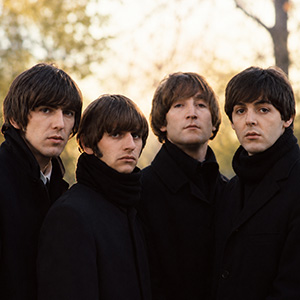
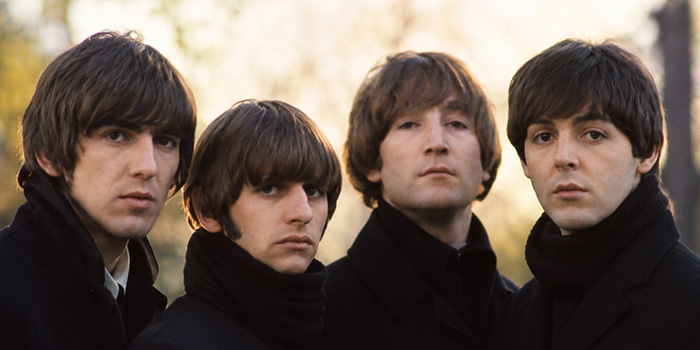
In less than ten years, the Beatles transformed popular music and mass culture. Formed in Liverpool, they rose from small clubs to the world’s largest stages before becoming pioneers of studio recording. Their rapid evolution, creativity and complementary personalities explain why their influence remains so powerful.
From Liverpool to the Classic Lineup
The group began to take shape in the late 1950s around John Lennon, Paul McCartney and George Harrison. Lennon initially led the Quarrymen, a band inspired by skiffle and American rock and roll. McCartney joined him in 1957, followed by Harrison in 1958.
In the early 1960s, the group adopted the name “The Beatles” and played long series of concerts in Hamburg. These stays helped develop their endurance, repertoire and stage presence. Back in Liverpool, the Beatles became one of the leading attractions at the Cavern Club.
Brian Epstein discovered them in 1961 and became their manager. He improved their public image and arranged auditions for them. In 1962, producer George Martin agreed to work with the group at Parlophone. Pete Best was then replaced by Ringo Starr, completing the famous lineup:
-
John Lennon sang, played guitar and wrote songs.
-
Paul McCartney sang, played bass and wrote songs.
-
George Harrison played lead guitar, sang and gradually contributed more compositions.
-
Ringo Starr played drums and usually sang one song on each album.
Early Success and Beatlemania
Their first single, “Love Me Do,” was released in 1962. Their success exploded in 1963 with “Please Please Me,” “From Me to You,” “She Loves You” and “I Want to Hold Your Hand.” Their first album, Please Please Me, was recorded largely in a single day.
Their early songs relied on direct melodies, vocal harmonies, danceable rhythms and the energy of rock and roll. Lennon and McCartney wrote most of the material under the shared Lennon–McCartney credit, even when one of them had composed most of a particular song.
The press quickly began using the term “Beatlemania” to describe the public’s enthusiasm. The screams of fans sometimes became so loud that the musicians could barely hear themselves play.
Conquering the United States
In early 1964, “I Want to Hold Your Hand” reached number one in the United States. On February 9, the Beatles appeared on The Ed Sullivan Show before an enormous television audience. The performance marked a turning point in their career and helped launch the British Invasion.
Their tours became massive events, and the Beatles were constantly followed by the media. The films A Hard Day’s Night and Help! combined music, humour and a playful portrayal of their fame. The first was also notable for featuring an album made entirely of Lennon and McCartney compositions.
A Changing Musical Style
Beginning in 1965, the Beatles moved beyond straightforward love songs. Rubber Soul introduced more introspective writing, more elaborate arrangements and folk influences. This development continued with Revolver in 1966.
“Eleanor Rigby” was built around a string ensemble, “Tomorrow Never Knows” used tape loops and sound effects, while “Love You To” strongly incorporated Indian music. Harrison’s “Taxman” even addressed British taxation.
The lyrics became more personal, social, philosophical and psychedelic. Most importantly, the Beatles began treating the studio as a creative instrument rather than simply a place to reproduce their live performances.
George Martin and Studio Innovation
George Martin played an essential role in their musical development. Drawing on his formal training, he turned their ideas into arrangements and technical solutions. He worked with recording engineers to experiment with multitrack recording, altered tape speeds, sound loops, reversed instruments and the combination of different takes.
Several songs became impossible to reproduce exactly on stage with the technology available at the time. The album therefore ceased to be merely a collection of songs and became a complete work designed specifically for listening.
The End of Touring
The Beatles gave their final official concert before a paying audience at Candlestick Park in San Francisco on August 29, 1966. The noise of the crowds, exhaustion, security problems and the increasing complexity of their songs all contributed to their decision to stop touring.
That same year, a statement by Lennon comparing the Beatles’ popularity with that of Christianity caused protests in the United States. The group then concentrated almost entirely on studio work.
Sgt. Pepper and the Psychedelic Period
Released in 1967, Sgt. Pepper’s Lonely Hearts Club Band was presented as a performance by a fictional band. This concept gave the Beatles greater freedom to explore new styles, change their appearance and create a highly elaborate album.
“With a Little Help from My Friends,” “Lucy in the Sky with Diamonds” and “A Day in the Life” are among its best-known songs.
The Beatles also took part in a live worldwide television broadcast with “All You Need Is Love.” Their music became closely associated with the counterculture and the Summer of Love. The Magical Mystery Tour project was less successful as a film, but its music included several major songs.
India and the White Album
George Harrison developed a deep interest in Indian music. He studied the sitar with Ravi Shankar and helped introduce these sounds to a wider Western audience.
In 1968, the Beatles travelled to Rishikesh to study Transcendental Meditation. During their stay, they composed many of the songs that would appear on the double album commonly known as the White Album.
The record displayed remarkable variety, including rock, folk, blues, experimental music, parodies and ballads. It also revealed growing fragmentation, as the members sometimes worked separately.
George Harrison and Ringo Starr
Long overshadowed by Lennon and McCartney, Harrison developed into a major songwriter. His compositions included “While My Guitar Gently Weeps,” “Something” and “Here Comes the Sun.” He also introduced several elements of Indian music into the group’s repertoire.
Ringo Starr contributed a restrained but inventive drumming style that always served the songs. He sang “Yellow Submarine” and “With a Little Help from My Friends,” among others, and later wrote “Octopus’s Garden.”
Apple Corps and Growing Tensions
After Brian Epstein’s death in 1967, the Beatles lost their main organizer. They founded Apple Corps to manage their activities and support artistic projects, but the company suffered from confused administration.
Tensions increased over finances, artistic control and the choice of a new manager. Yoko Ono’s presence beside Lennon has often been blamed for the breakup, but the underlying problems were much broader: exhaustion, conflicting interests, financial disputes and a growing desire to pursue individual projects.
Let It Be, the Rooftop and Abbey Road
In early 1969, the Beatles began a project intended to restore a simpler and more collective style of performance. The filmed sessions eventually became Let It Be.
On January 30, 1969, the group performed on the roof of the Apple Corps building in London. This became their final public concert appearance.
The Beatles then recorded Abbey Road, the last album they completed together. It included “Come Together,” “Something” and “Here Comes the Sun.” Although Let It Be was released after Abbey Road, much of it had been recorded earlier.
The Breakup and Solo Careers
Lennon privately announced his departure in September 1969. In April 1970, McCartney made it known that he was no longer working with the group. Their business disputes continued in court.
All four members pursued solo careers. Lennon created deeply personal and politically engaged work until his murder in 1980. McCartney formed Wings and maintained a long career. Harrison organized the Concert for Bangladesh and achieved major success. Starr recorded several popular songs and also worked as an actor.
A Lasting Influence
The Beatles helped establish the self-contained songwriting band as a central model in popular music. They transformed the album, the recording studio, album-cover design and the relationship between music, media and youth culture.
Their catalogue includes rock and roll, pop, folk, psychedelic music, hard rock, Indian influences and experimentation. This diversity, combined with strong melodies and an exceptionally rapid evolution, explains why their songs continue to be performed, studied and discovered.
Quiz questions preview
-
In which city was the Beatles founded?
Birmingham | London | Manchester | Liverpool -
Who is the lead singer on the song "Penny Lane"?
Paul McCartney | John Lennon | George Harrison | Ringo Starr -
This song is famous for its "Yeah Yeah Yeah!"
She Loves You | I Need You | Love You to | I Want You -
Where was the band's last public performance?
In a park | On the roof of a building | In a stadium | On Abbey Road -
This cover picture was taken in front of the EMI studios where most of the Beatles' songs were recorded.
Beatles for Sale | Rubber Soul | Magical Mystery Tour | Abbey Road