
Nobel Prize in Literature
Since 1901, the Nobel Prize in Literature has honoured writers whose work has profoundly marked their era or renewed literary forms. Novels, poetry, theatre, essays, and documentary writing have all been recognized over the decades. From Rudyard Kipling to Toni Morrison, from Albert Camus to Gabriel García Márquez, the list of laureates offers a broad panorama of world literature.
The Origins of the Nobel Prize in Literature
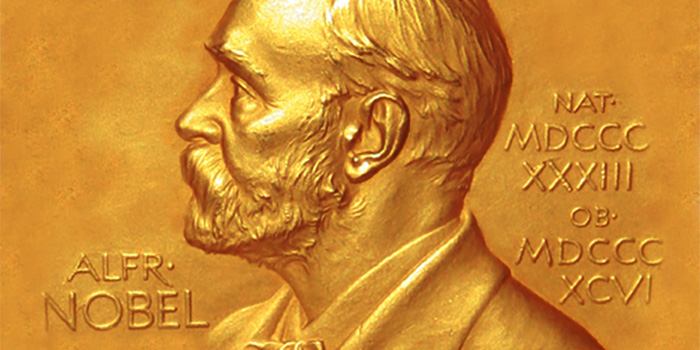
The Nobel Prize in Literature originated in the will of Alfred Nobel, a Swedish chemist, engineer, and industrialist who died in 1896. The inventor of dynamite, among other things, Nobel left most of his fortune to establish prizes intended to reward individuals who had made important contributions to humanity.
Five fields were originally included: physics, chemistry, physiology or medicine, literature, and peace.
For literature, Nobel wished to reward an author who had produced an outstanding body of work in what he described as an “ideal” direction. This wording has been interpreted in many different ways throughout the history of the prize.
The first Nobel Prize in Literature was awarded in 1901 to the French poet Sully Prudhomme.
The Selection of Laureates
The Nobel Prize in Literature is awarded by the Swedish Academy, an institution founded in 1786 and composed of eighteen members.
Writers cannot submit their own candidacies. Nominations must come from authorized individuals or institutions, including members of literary academies, professors of literature and linguistics, previous Nobel laureates, and leaders of certain writers’ associations.
A committee studies the nominations and gradually narrows the list before the Swedish Academy selects the laureate.
Information concerning nominations remains secret for fifty years. As a result, it often becomes known only decades later that certain major writers had been nominated several times without ever receiving the prize.
The Nobel generally recognizes an author’s overall body of work rather than a specific book, even though certain works obviously play a major role in establishing a writer’s reputation.
The Early Decades
The first decades of the Nobel strongly reflected European literary traditions. Poets, playwrights, philosophers, and novelists, some of whom are better remembered today than others, succeeded one another as laureates.
Important winners from the early twentieth century include:
-
Rudyard Kipling, awarded the prize in 1907, was notably the author of “The Jungle Book.”
-
Selma Lagerlöf became the first woman to receive the Nobel Prize in Literature in 1909.
-
Maurice Maeterlinck, a Belgian playwright and poet, was honoured in 1911.
-
Romain Rolland received the prize in 1915.
-
Anatole France was honoured in 1921.
-
George Bernard Shaw received the Nobel in 1925.
-
Thomas Mann, author of “The Magic Mountain,” was awarded the prize in 1929.
Several giants of literature from this period never received the prize. Leo Tolstoy, Anton Chekhov, Marcel Proust, James Joyce, and Franz Kafka are among the most frequently noted omissions.
Writers Who Became Classics
From the 1930s onward, and especially after the Second World War, many Nobel laureates became major figures in world literature.
Luigi Pirandello, the 1934 laureate, profoundly renewed theatre through his exploration of identity, illusion, and the relationship between characters and actors.
Hermann Hesse, awarded the prize in 1946, was notably the author of “Siddhartha” and “Steppenwolf.”
William Faulkner received the prize in 1949 for a body of work that transformed the American novel through complex structures, shifting points of view, and his exploration of the American South.
Other major names followed:
-
François Mauriac in 1952.
-
Ernest Hemingway in 1954.
-
Albert Camus in 1957.
-
Boris Pasternak in 1958.
-
Saint-John Perse in 1960.
-
John Steinbeck in 1962.
-
Jean-Paul Sartre in 1964.
-
Samuel Beckett in 1969.
The diversity of styles became increasingly apparent. The Nobel could honour Steinbeck’s realism, Hemingway’s stripped-down prose, Beckett’s theatre of the absurd, or Camus’s philosophical reflection.
French Writers
French literature occupies an important place in the history of the Nobel. Sully Prudhomme inaugurated the list of laureates in 1901.
Over the decades, many French writers have received the prize, including Anatole France, Romain Rolland, André Gide, François Mauriac, Albert Camus, Saint-John Perse, Jean-Paul Sartre, Claude Simon, Jean-Marie Gustave Le Clézio, Patrick Modiano, and Annie Ernaux.
Albert Camus received the prize in 1957 at only 44 years old. The author of “The Stranger,” “The Plague,” and “The Fall” was recognized for a body of work dealing notably with the absurd, revolt, and the human condition.
Annie Ernaux was honoured in 2022. Her work combines personal experience, collective memory, and observation of social change.
An Increasingly International Prize
For much of its history, the Nobel was regularly criticized for the strong presence of European writers among its laureates.
Gradually, however, the Academy broadened its attention to other literary traditions.
The Japanese writer Yasunari Kawabata received the prize in 1968. Colombian author Gabriel García Márquez was honoured in 1982, confirming his status as one of the major figures of Latin American magical realism and the author of “One Hundred Years of Solitude.”
Nigerian writer Wole Soyinka became the first Black African to receive the Nobel Prize in Literature in 1986. Two years later, Egyptian writer Naguib Mahfouz became the first Arabic-language author to win the prize.
Other laureates from diverse literary traditions include:
-
Octavio Paz, from Mexico.
-
Derek Walcott, from Saint Lucia.
-
Kenzaburō Ōe, from Japan.
-
Gao Xingjian, a Chinese-born writer who became a French citizen.
-
Orhan Pamuk, from Turkey.
-
Mo Yan, from China.
-
Abdulrazak Gurnah, born in Zanzibar and based in the United Kingdom.
This broader outlook helped introduce international readers to works from languages and cultures that had previously been less represented in the Western literary canon.
Toni Morrison and Major Women Writers
Women were long heavily underrepresented among Nobel laureates.
After Selma Lagerlöf in 1909, several decades could pass without a woman receiving the prize. Grazia Deledda, Sigrid Undset, Pearl Buck, and Gabriela Mistral were among the earliest female laureates.
American writer Toni Morrison received the Nobel in 1993. Novels such as “Beloved” explore the legacy of slavery, memory, and the African American experience.
Other major women writers were honoured in later years, including:
-
Wisława Szymborska.
-
Elfriede Jelinek.
-
Doris Lessing.
-
Herta Müller.
-
Alice Munro.
-
Svetlana Alexievich.
-
Olga Tokarczuk.
-
Louise Glück.
-
Annie Ernaux.
-
Han Kang.
Alice Munro, awarded the prize in 2013, is particularly associated with the short story. The Canadian writer devoted most of her career to this literary form, which has often been considered less prestigious than the novel.
The Nobel and Latin America
The Nobel Prize helped establish several major figures of Latin American literature on the world stage.
Chilean poet Gabriela Mistral became the first Latin American to receive the Nobel Prize in Literature in 1945.
Miguel Ángel Asturias of Guatemala was honoured in 1967. Pablo Neruda, another great Chilean poet, received the Nobel in 1971.
Gabriel García Márquez was awarded the prize in 1982. His work, associated with magical realism, combines history, legend, politics, and extraordinary events presented as natural parts of reality.
Mexican writer Octavio Paz received the prize in 1990, and Peruvian writer Mario Vargas Llosa in 2010.
Refusing a Nobel Prize
The prestige of the Nobel did not prevent some laureates from refusing the award.
In 1958, Boris Pasternak, author of “Doctor Zhivago,” initially accepted the prize before being forced to decline it under intense pressure from Soviet authorities.
The most famous case remains that of Jean-Paul Sartre. In 1964, the French writer and philosopher voluntarily refused the Nobel. Sartre had a personal principle of rejecting official honours and wished to preserve his intellectual independence.
His refusal did not cancel the award: he remains officially recognized as the 1964 Nobel laureate in Literature.
Bob Dylan and the Boundaries of Literature
In 2016, the awarding of the Nobel Prize to Bob Dylan sparked considerable debate.
The American singer-songwriter was honoured for his contribution to the tradition of song. For some, his lyrics possess genuine poetic value, and the decision recognized a very old literary tradition linking poetry and music.
For others, the Nobel should have remained reserved for writers whose work appears primarily in books.
The decision therefore raised a fundamental question: what can be considered literature?
The Nobel had already honoured authors whose work extended beyond traditional literary forms, but the selection of Dylan pushed the boundaries of the prize even further.
Controversies and Omissions
The Nobel Prize in Literature has never been free from controversy. Some choices have been viewed as too political, too European, or too distant from popular literary tastes.
The absence of certain celebrated writers has also fuelled debate. Tolstoy, Proust, Joyce, Virginia Woolf, Jorge Luis Borges, and Vladimir Nabokov never received the prize.
In 2018, a serious crisis shook the Swedish Academy and led to the postponement of the award. The 2018 Nobel Prize was eventually awarded in 2019 to Polish writer Olga Tokarczuk, the same year Austrian author Peter Handke received the 2019 prize.
Handke’s selection itself provoked significant controversy because of his positions concerning the wars in the former Yugoslavia.
The Nobel in the Twenty-First Century
Since the beginning of the twenty-first century, the Academy has continued to alternate between internationally famous writers and authors less familiar to the general public.
Laureates have included V. S. Naipaul, J. M. Coetzee, Harold Pinter, Doris Lessing, Jean-Marie Gustave Le Clézio, Herta Müller, Mario Vargas Llosa, Alice Munro, Patrick Modiano, Kazuo Ishiguro, and Olga Tokarczuk.
The 2020s particularly illustrate the diversity of the Academy’s choices: American poet Louise Glück in 2020, novelist Abdulrazak Gurnah in 2021, Annie Ernaux in 2022, Norwegian playwright and novelist Jon Fosse in 2023, and South Korean novelist Han Kang in 2024.
In 2025, the prize was awarded to Hungarian writer László Krasznahorkai, whose dark and visionary work is notably characterized by long sentences and fictional worlds often hovering near collapse.
More than a century after its creation, the Nobel remains one of the most prestigious literary honours in the world, but also one of the most debated. Each announcement renews discussions about literary value, linguistic diversity, the place of different regions of the world, and the very definition of what constitutes a great work of literature.
Quiz questions preview
-
Spanish, Nobel Prize in 1956, he is the author of "Platero and I".
Antonio Machado | Juan Ramón Jiménez | Vicente Huidobro | César Vallejo -
American, Nobel of 1938, she is the author of "East Wind: West Wind".
Margaret Laurence | Pearl Buck | Vita Sackville-West | Virginia Woolf -
In which language did the Swiss Carl Spitteler write?
English | French | Italian | German -
British, Nobel of 1953, he is the author of "War Speeches".
T.S. Eliot | Winston Churchill | Ernest Hemingway | Halldór Laxness -
Which of these authors has won a Nobel Prize in Literature?
Elie Wiesel | Upton Sinclair | C. S. Lewis | Patrick Modiano