Surprise Attacks, Unexpected Blows
Whether intended to begin a conflict, strike a symbol, or break a deadlock, surprise attacks use the unexpected to disorganize an opponent. From the Trojan Horse to modern drones, some have altered the course of wars, while others have mainly left lasting trauma.
Surprise as a Strategic Principle
A surprise attack seeks to strike before the enemy can respond effectively. It relies on secrecy, speed, concealment, or the target’s incorrect reading of the situation.
The objective is not only to cause losses. It is also to create confusion, disrupt communications, weaken command structures, and prevent a coordinated response.
Surprise may be tactical when it concerns a specific battle, operational when it disrupts a campaign, or strategic when it changes an entire conflict. Its effectiveness depends on the ability to exploit the initial advantage quickly.
Deception, Diversion, and Disinformation
Surprise attacks often require careful preparation and a deliberate effort to mislead the opponent.
Deception may involve:
-
Pretending to retreat.
-
Secretly concentrating troops.
-
Spreading false information.
-
Creating a diversion.
-
Using a route believed to be impossible.
-
Striking at a time considered unlikely.
The Trojan Horse, described in Greek tradition, is one of the best-known examples. Achaean warriors were said to have entered Troy hidden inside a structure presented as a gift.
Even if partly legendary, the episode illustrates a constant principle of warfare: defeating an opponent by exploiting trust or expectations.
When an Attack Begins a Conflict
Some surprise attacks mark the beginning of a war or cause it to expand.
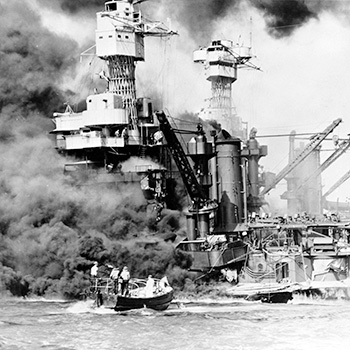
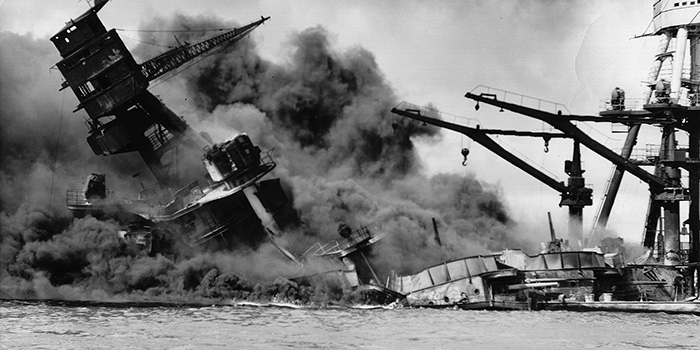
The Japanese attack on Pearl Harbor in 1941 aimed to neutralize part of the American Pacific Fleet. It achieved a major immediate effect, but also led the United States to enter the Second World War.
Operation Barbarossa, launched that same year by Nazi Germany against the Soviet Union, caught Soviet forces largely unprepared. The early gains were enormous, but the offensive did not achieve a rapid victory.
These examples show that an initial shock does not guarantee final success. An attack may disorganize the enemy while also provoking a much broader mobilization.
Striking a Symbol
Some attacks aim as much for psychological impact as for military results.
A port, capital, official building, or strategic installation may represent far more than its material value. Attacking it creates the impression that no place is truly secure.
The attacks of September 11, 2001, illustrate this logic. The chosen targets represented the economic and military power of the United States. The impact extended far beyond the immediate destruction and permanently changed security policies.
Symbolic attacks therefore seek to create a powerful image designed to affect people far beyond the location itself.
The Role of Intelligence
Surprise often depends on an intelligence failure. Information may be missing, misunderstood, or fail to reach the right people.
Sometimes warning signs exist but appear contradictory or unconvincing. Leaders may also refuse to believe that an attack is possible.
Surveillance, intercepted communications, reconnaissance, and analysis of enemy movements can reduce the risk. Complete surprise is rare: it often results from a failure to interpret available information correctly.
The Psychological Effect
The unexpected intensifies fear. A surprised unit may believe the enemy is more numerous or better prepared than it actually is.
Confusion can produce contradictory orders, disorganized retreats, and a loss of confidence. For civilians, an unexpected attack may change daily habits, deepen insecurity, and leave a collective trauma.
This psychological effect explains why some relatively limited operations occupy such a major place in historical memory.
The Limits of Surprise
Surprise provides only a temporary advantage. If the attacker does not advance quickly, the opponent may reorganize.
An operation may fail because secrecy is lost, objectives are too ambitious, forces are insufficient, or terrain slows the advance.
The German offensive in the Ardennes in 1944 surprised the Allies and created a major crisis. It nevertheless failed to achieve lasting objectives because of resistance, logistical difficulties, and limited resources.
From Ambushes to Drones
The methods used to surprise an opponent have evolved.
In antiquity and the Middle Ages, surprise often relied on night marches, ambushes, and infiltration. The industrial era added rapid transportation and bombardment. In the 20th century, aircraft and special forces made it possible to strike far behind enemy lines.
Today, missiles, cyberattacks, and drones make remote action possible. A cyberattack may disrupt communications before a military operation, while a drone can observe and strike quickly.
Technology changes the means, but the principle remains the same: act when the opponent is least prepared.
A Victory That May Be Misleading
Surprise attacks fascinate because they create the image of a bold plan capable of overturning a situation. Their success, however, must be judged over the long term.
An operation may succeed militarily while provoking an unfavourable political reaction. It may destroy a target without achieving its strategic goal or may strengthen the opponent’s determination.
Surprise is therefore a powerful tool, but never a guarantee. Its true effect depends on the ability to secure the advantage, manage the response, and achieve a lasting result.
Quiz questions preview
-
Which empire was overthrown by Hernán Cortés after a surprise attack on its capital Tenochtitlan in 1521?
Aztec Empire | Inca Empire | Toltec Empire | Maya Empire -
Which weapon was used for the first time by Germany in June 1944 to attack London without warning?
V1 | Stuka | V2 | Panzer -
Which American port was attacked by Japan in a surprise assault on December 7, 1941?
Pearl Harbor | Guam | Norfolk | San Diego -
Which port was attacked by surprise by the Japanese on February 8, 1904, marking the beginning of the Russo-Japanese War?
Vladivostok | Port Arthur | Kobe | Shanghai -
What was the name of the German operation designed to surprise the USSR during the June 22, 1941, invasion?
Operation Barbarossa | Operation Typhoon | Operation Bagration | Operation Weserübung